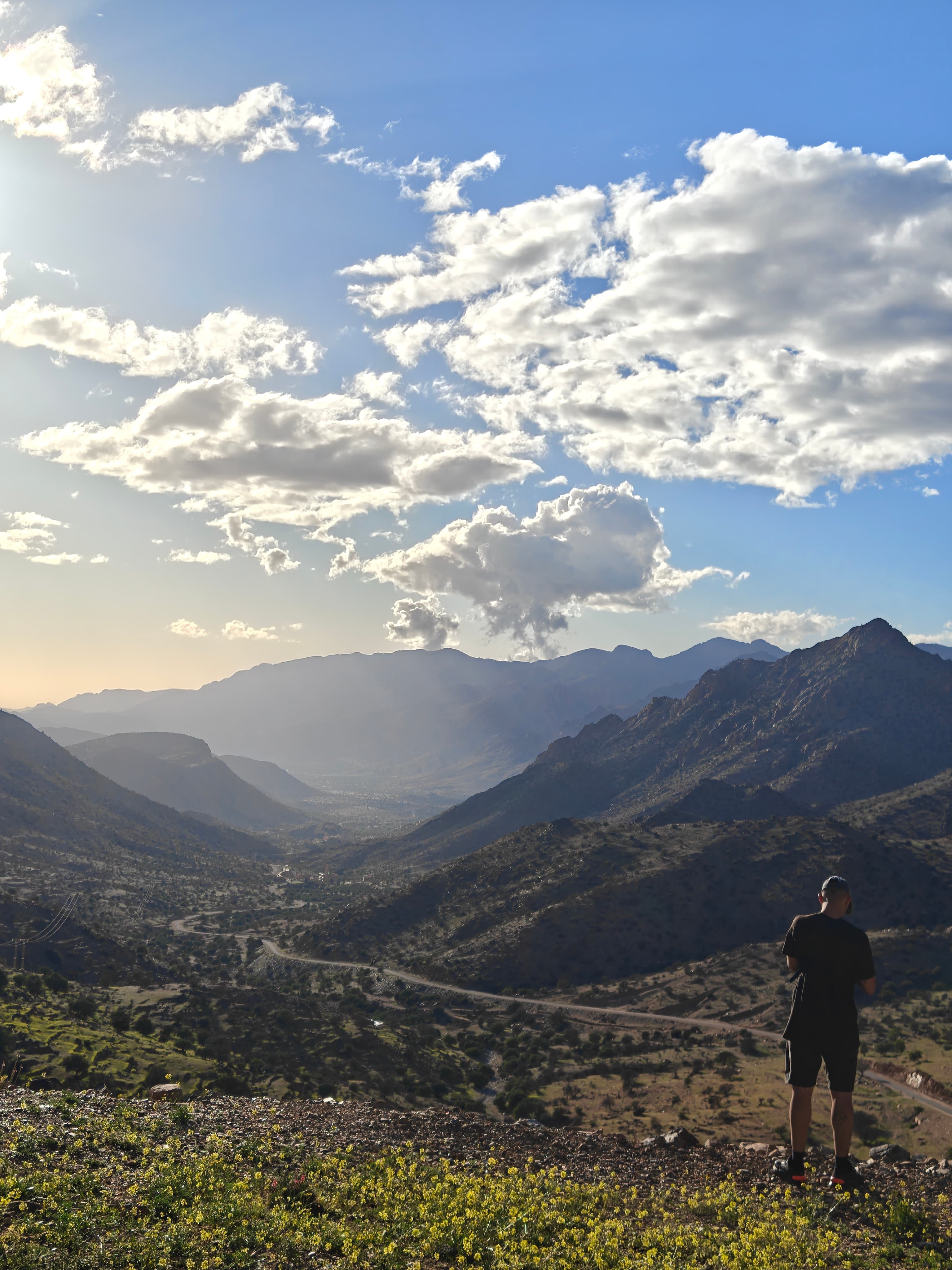
What Is Paradise Valley, Really?
Paradise Valley, also called Aoulouz Gorge or Immouzzer des Ida Outanane, is a natural gorge and oasis carved out by the Issen river as it descends from the Anti-Atlas mountains, with a series of natural fresh water pools shaded by palm and argan trees. The palm-lined gorge sits about an hour inland from Taghazout, where a small river cuts through rock and forms a chain of swimming pools, some deep enough to jump into from the cliffs.
The gorge is lined with argan trees, natural pools fed by mountain springs, and Berber farming communities that have worked this land for generations. The valley has become a established day trip destination, but the experience you get depends heavily on timing, water levels, and the season.
It's worth being honest about what Paradise Valley is—and isn't. When water levels are high, it's genuinely beautiful with turquoise pools, fig trees, and kids selling fresh orange juice on a rock. In low-water months, the pools can become stagnant. Paradise Valley is worth a rest day from Taghazout only if you go on a weekday, get there before 10am, and only between roughly March and early July, or after a serious autumn rain—show up on a Saturday in August and you'll have a hot, dusty hike to look at other people's selfie sticks.
Getting There From Taghazout
The most straightforward way to visit is to book an organized excursion—Tazuri can arrange this for you. Local operators like Surf Berbere offer day trips at 200 MAD per person (minimum 3 people), departing 10am and returning 4:30pm, including transport, guide, lunch, water, and an argan cooperative stop. Other operators like Admire Morocco charge around 250 MAD per person with hotel pickup included.
If you prefer more autonomy, there are other routes. You can take a grand taxi from Taghazout to Aourir (5–7 MAD), then a shared grand taxi from Aourir to Paradise Valley (approximately 25 MAD), totaling roughly 30–32 MAD per person one-way. This works but requires patience between connections.
For those with a rental car, leave Taghazout north on the N1, turn inland at Aourir towards Immouzzer des Ida Outanane—the journey is approximately 25–40 minutes from Taghazout, mostly paved with some narrow sections and hairpin bends in the foothills, and a standard hire car handles it fine without a 4x4.
The Hike & Swimming
Once you arrive at the parking area, the walk in is manageable. There is a short hike of 15–30 minutes from the parking area to reach the main swimming spots, with a moderate trail suitable for most people when wearing good walking shoes.
The valley floor has a series of natural fresh water pools—some accessible with a short walk, others requiring more of a scramble—shaded by palm and argan trees. The water is cold (especially in winter) but swimmable, best from April to October.
For anyone wanting to explore beyond the main pools, you can walk upstream from the main access point for progressively more remote pools and less crowded sections. This is where the valley actually feels like its name.
If you're up for it, there are spots where you can jump into the pools from rocky ledges—always check the depth and safety first.
What to Bring
It's essential to wear comfortable shoes like sneakers or hiking boots as paths can be rocky and uneven. Bring a swimsuit, towel, sun protection like sunscreen and a hat, and your own water and a few snacks, though some vendors are present.
When to Go (and When to Skip)
Timing is everything. Late winter or early spring (January to March) is the best time—waterfalls are at their fullest and the valley is lush and green. Spring (March to June) is particularly ideal—the Atlas snowmelt fills the valley river, the pools are deep and cold, small waterfalls appear in sections that are dry the rest of the year, and the vegetation around the gorge is at its greenest, with temperature warm enough to swim comfortably.
Summer (June to August) can be hot and dry, and the valley tends to get crowded. The accessible pools nearest the road can feel like a public swimming pool on a summer weekend.
For a peaceful experience, aim for a weekday visit. Avoid public holidays and Moroccan holiday periods when families from nearby cities drive out for the day.
What About Guided Tours vs. Solo?
The main valley is accessible independently and easy to navigate, though a guide adds context and takes you to less obvious pools, but isn't necessary. A guide makes sense if you're traveling with mixed ages, young children, or if you want to access the lesser-known sections like Tizgui valley.
For very young children (under 5–6) or anyone with significant mobility limitations, the main challenge is the access path to the pools: it involves a 15–20 minute walk over rocky, uneven ground with some scrambling involved. The pools themselves have no lifeguards and variable depths—parents need to actively supervise children near the water, though the shallow, calmer areas of larger pools are suitable for non-swimmers to wade.
Food & Local Economy
Locals have set up cafés along the first section of the hike where you can sit with your feet in the cooling pools or under bamboo and palm leaf shade to enjoy freshly squeezed seasonal juice, couscous or a tagine. These are simple, friendly spots—supporting them is part of visiting sustainably.
Plan Your Timing
Plan for 4-5 hours door to door: 1 hour drive each way, 2-3 hours at the valley including the walk in, and adding lunch in Aourir on the way back brings it closer to 6 hours—easy to slot in between morning surf and sunset.
The takeaway: Paradise Valley is worth visiting, but only if you go on the right day in the right season. Come in spring or autumn, arrive early, or walk further from the road, and you'll find the version that justifies the name. A Wednesday in May beats a Saturday in August every time. If you're staying more than a few days at Tazuri, it makes a perfect rest-day escape.
Frequently asked questions
What is the best time to visit Paradise Valley?
Spring (March to June) is ideal—the snowmelt fills the pools, waterfalls are flowing, and the valley is lush and green. Avoid July-August and weekends unless you enjoy crowds.