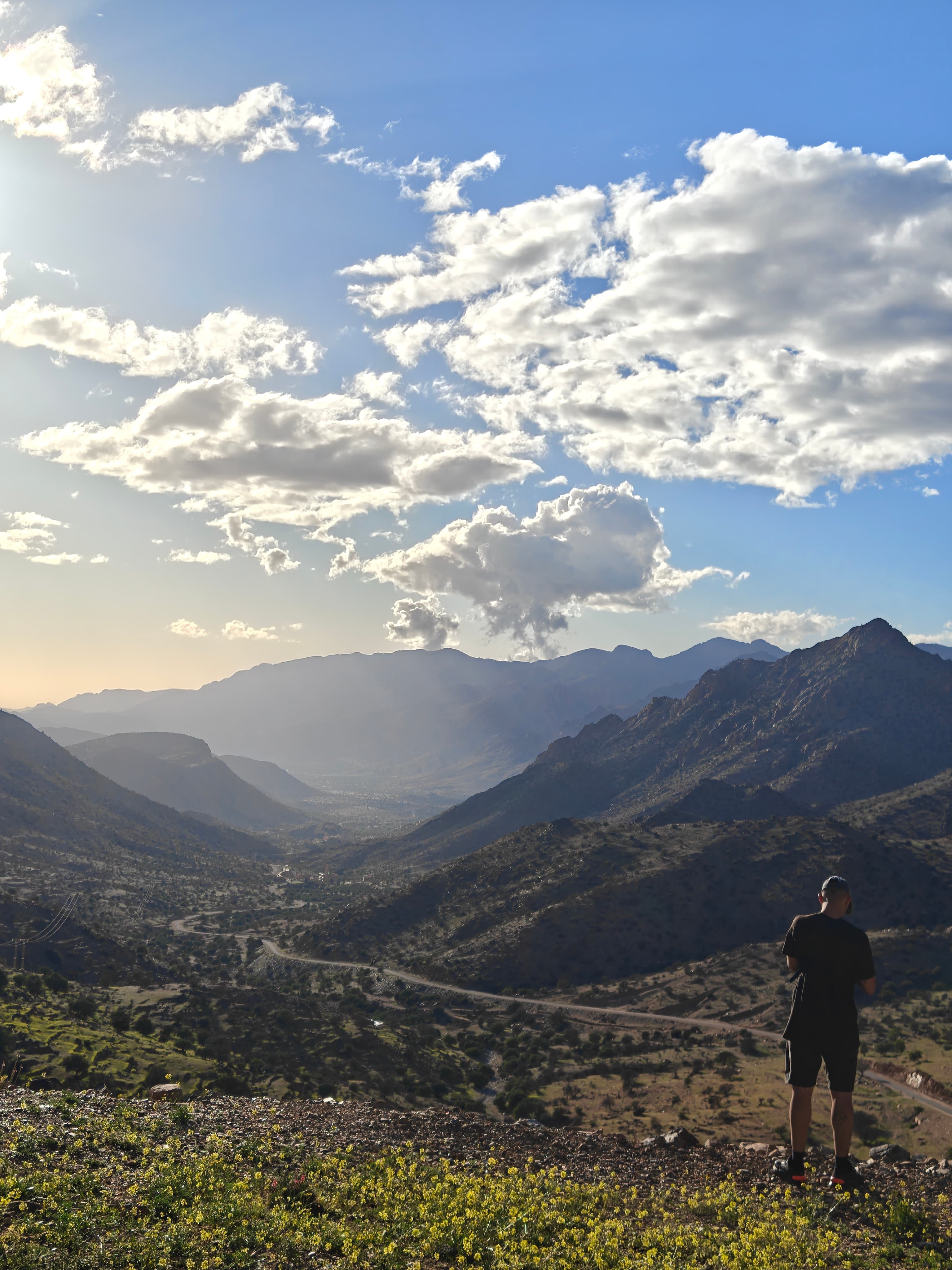
Taghazout looks small on a map, but the surf is spread out — Anchor Point at one end of town, Killer Point tucked around the headland, Boilers and Panorama a scooter ride north, and Devil's Rock a scramble down from the cliff path. Renting a scooter or bike is how most people here stop checking the swell forecast and just go check it themselves.
Walking works for the first day or two. After that, the tide windows start moving faster than your legs can carry a board, and the best sessions are the ones you catch because you got there before the wind turned. That's the real case for renting a scooter or bike in Taghazout — not convenience for its own sake, but the freedom to chase a break twenty minutes away instead of settling for whatever's breaking in front of your guesthouse.
Why Renting Wheels Changes How You Surf Here
The surf spots around Taghazout aren't clustered — they're strung along several kilometers of coastline, each working best on a different swell direction, wind, and tide. Anchor Point and Killer Point sit close to the village center. Boilers, Panorama, and Hash Point are further north toward Aourir. Tamraght, with its own beach break and mellower learning waves, is a short ride south. If a north swell is filling in but the wind is onshore at the main points, the guys who rode a scooter twenty minutes up the coast are the ones surfing clean waves that morning.
This is also why grand taxis, while fine for a one-off trip, stop making sense once you're here more than a few days. They wait around, they cost more per trip than a rental costs per day, and they're not built for hauling a board rack at 7am.
Scooter or Bike: Which One Fits Your Trip
Scooters and mopeds for covering distance
A scooter is the obvious choice if you're planning to surf more than one spot in a week. The coast road connecting Taghazout, Aourir, and the breaks further north is flat, sealed, and easy riding even if you haven't been on two wheels in years. A scooter also means you're not limited to the village — a day trip north toward Imsouane or inland toward Paradise Valley becomes a realistic option rather than something you need a taxi or organized excursion for.
Bicycles for short, local hops
A bike does the job for anything within Taghazout itself and the ride down to Tamraght — flat coastal stretches where the effort is more about the heat than the distance. It won't get you comfortably to the northern breaks and back before your legs give out, especially with a board under your arm, but for popping between the village center, the beach, and Tamraght's cafés, it's cheap and it keeps you moving at a pace where you actually notice the town.
What Renting Actually Costs
Rental prices around Taghazout shift with the season and with how long you're booking for — a scooter for a single day costs more per day than the same scooter booked for a week, and prices tend to move up around the busiest surf months. Fuel is separate from the rental price, and a deposit (cash or sometimes a passport copy) is standard practice at most stalls.
If you're weighing up a scooter rental against Tazuri's own surf packages, it's worth knowing what's already bundled. The surf activity runs from around 150 € per person and includes boards and guiding, with wetsuit and board rental as simple add-ons if you didn't bring your own gear — so for pure surf logistics, you're not necessarily choosing between "rent a scooter" and "rent a board," you can do both depending on what the day calls for.
Finding a Rental Shop in Taghazout
Rental stalls in Taghazout are mostly small, family-run operations rather than branded chains — you'll spot scooters and bikes lined up along the main road through the village and around the square near the port. There's no single dominant shop; it's more a matter of walking the main street, comparing what's on offer, and picking based on the bike itself rather than a name on a sign.
A few things worth checking before you hand over a deposit:
- Both brake levers actually stop the wheel, and the tires have tread left
- There's a working horn and lights if you'll be riding at dusk
- The helmet fits properly — not just handed to you as a formality
- You agree on the return time and fuel level in advance, ideally in writing or a photo of the odometer
Getting to the Surf Spots: What to Actually Expect on the Road
The coast road is straightforward, but a few local quirks catch first-timers out. Sand drifts across the tarmac in patches, especially near the beach access points, and it's slick under a scooter tire if you're not expecting it. Stray dogs are common along the village stretches — nothing aggressive, but worth slowing for. And parking near the points themselves is informal: you'll see scooters lined up on the verge near Anchor Point and Killer Point, generally left unlocked with the key in a pocket rather than chained to anything.
Fuel stations are not on every corner — there's usually one on the main road through town, but if you're heading further north toward Imsouane or inland, it's worth filling up before you leave rather than assuming you'll pass another one. Mornings are the easiest time to ride: the road is quieter, the light is better for spotting sand patches, and you'll usually beat the wind that tends to pick up by midday and turn the points onshore.
Half the surf trip planning in Taghazout happens on the back of a scooter, not in front of a forecast.
When a Taxi or Guided Trip Still Makes More Sense
Not every trip calls for your own wheels. Longer excursions — Paradise Valley, the Berber markets, or a full day inland toward the Atlas Mountains — cover more ground and rougher terrain than a rented scooter is really built for, and that's where a guided excursion earns its keep instead. It also means you're not the one navigating unfamiliar roads after a long day.
Bringing It Back to Tazuri
However you get around, most days here still end the same way: back at Tazuri, boards leaning against the wall, someone comparing notes on which spot was actually working that afternoon. If you're building a first surf trip around exactly this kind of flexibility — a scooter some mornings, a guided session others — it's worth a look at the surf starter pack, which folds boards, daily lessons, and a bed into one straightforward booking.
Renting a scooter or bike in Taghazout isn't complicated, and it doesn't need to be expensive to change how your week unfolds. Walk the main street, test the bike before you commit, fill the tank before a longer ride, and let the tide — not the taxi rank — decide where you surf next.
Frequently asked questions
Do I need a license to rent a scooter in Taghazout?
Most rental stalls ask for ID and a cash deposit rather than checking for a specific license class, but you should still carry your driving license — some shops do ask, and you'll want it if you're ever stopped on the coast road.